3 Min Read
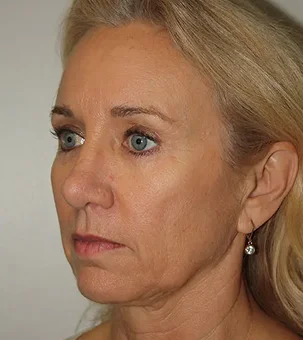
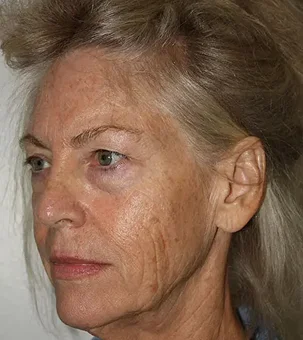
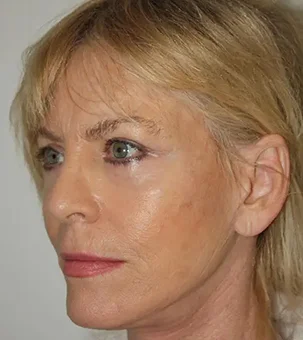
Facelift incisions start in the hairline near the temples and continue behind the ears. This way, the resulting scars can be hidden in the hairline and the natural creases of the ear—which is a good thing considering that your face is always on display, and no one wants to highlight the visible proof of their facelift surgery.
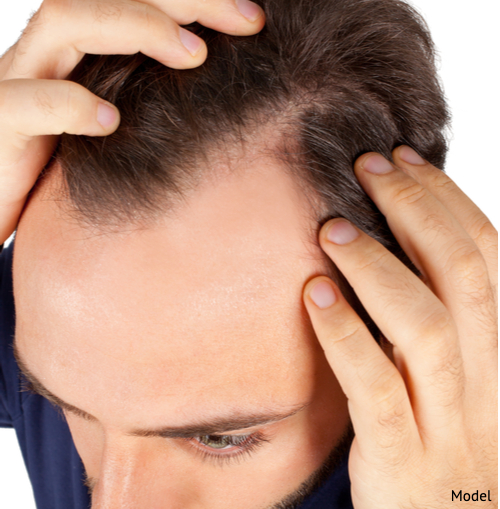
Unfortunately, hairlines do not always remain the same as you grow older. Both men and women are at risk of a receding hairline.
So, how will this receding hairline affect your facelift scars?
Will My Hair Loss Highlight My Facelift Scars?
Men and women tend to experience hair loss differently, and this hair loss affects the surgical techniques used in a facelift.
Male Pattern Baldness
More often than not, male facelift patients are more concerned about thinning or a receding hairline than female patients. This is likely because over 85 percent of men above the age of 50 experience some degree of hair loss.
Since the majority of men—and therefore facelift patients—will suffer hair loss or a receding hairline, the visibility of a facelift scar is an understandable concern.
Fortunately, male pattern baldness is usually characterized by thinning on the top of the head, such as the area above the temples and the crown. Often, even men with significant male pattern baldness keep their hair around the sides of their heads, which is usually where the hairline incisions are located.
Dr. Ackerman is meticulous in his incision placement for men with thinning or receding hairlines. He makes every effort to reduce the chances of scar visibility.
If the hair loss continues after a facelift, or if a male decides to shave his head down the road, the facelift scars will fade and become imperceptible in a year or two.
Female Pattern Baldness
Unlike male pattern baldness, female pattern baldness tends to develop as the gradual receding of a frontal hairline and decreased hair density. Female pattern baldness typically does not affect the appearance of facelift scars.
Will a facelift leave a scar?
All surgical incisions leave a scar. Fortunately, facelift scars become imperceptible with time. A skilled facelift surgeon will place the scars in the least noticeable location, and suture the incision to allow for ideal healing.
How Can I Reduce the Appearance of My Facelift Scars?
Your surgeon will use various techniques to achieve the least noticeable scar. There are some things that the patient can do as well to reduce the visibility of the scars.
- Stay out of the sun: Ultraviolet rays will increase the pigment and darken the scars. To avoid this, try to keep the healing incisions out of the sun and apply a broad-spectrum sunscreen.
- Minimize trauma to the healing incisions: Fortunately, your facelift incisions do not experience as much stretching or pulling as some other plastic surgery incisions (such as tummy tuck or body contouring incisions). Still, you want to protect the incisions and avoid any pressure that could cause the incisions to split or widen. This includes massaging the healing incision too hard too soon. Massages are beneficial in breaking up scar tissue once the incisions have healed, but they should be avoided while the incisions can still be damaged.
- Use silicone strips or topical scar cream: Silicone scar strips and topical scar cream reduce the visibility of the scar and reduce the chances of keloid or hypertrophic scars. These remedies are rarely needed after a facelift surgery.
All facelift scars will fade with time.
How Can I Learn More About Facelift Surgery in Newport Beach?
If you would like to learn more about facelift surgery or need additional tips about how to reduce postoperative scarring, contact Dr. Boris Ackerman by calling (949) 759-3284 or by filling out our online contact form.